
What is Compound Interest?
Compound interest is a fundamental financial concept that refers to the interest calculated on the initial principal and the accumulated interest from previous periods. Unlike simple interest, which is computed solely on the original principal amount, compound interest allows for the exponential growth of an investment or savings over time. This principle can significantly enhance wealth over the long term.
The process of compounding can be easily understood through a straightforward example. Consider a scenario where an individual invests $1,000 at an annual interest rate of 5%. Under simple interest, the investor would gain $50 each year, resulting in a total of $1,250 after five years. However, with compound interest, the interest earned in the first year would also earn interest in subsequent years. In this case, the initial principal of $1,000 would accrue $50 in the first year. In the second year, the interest is calculated not just on the original investment but also on the accumulated amount—which would be $1,050. This process continues, dramatically increasing the total value over time.
To illustrate further, let’s extend the example to a 10-year period with the same initial investment of $1,000 and a compounded annual interest rate of 5%. By the end of the decade, the investment would have grown to approximately $1,628.89. Throughout this period, the investor benefits not just from the initial capital growth but also from the interest accruing on previously earned interest. This effect, known as ‘the snowball effect’ of compounding, emphasizes the importance of early investment and patience in building wealth.
The Power of Compound Interest Over Time
Compound interest is often referred to as the “eighth wonder of the world” for a reason. The effectiveness of this financial concept grows exponentially over time, meaning that the earlier an investment is made, the more substantial the returns will be due to the continuous compounding of interest. This highlights the critical importance of time in the realm of investments and savings.
To illustrate this concept, consider two individuals: Investor A starts investing early, at the age of 25, while Investor B begins at 35. Let’s assume both invest the same amount of money, say $5,000, and receive an average annual return of 7%. Over a period of 30 years, the power of compound interest works significantly in favor of Investor A. By the time Investor A reaches 55, their initial investment appreciates to nearly $38,000. In contrast, Investor B, who starts 10 years later, would see their investment grow to about $20,000 by the same age. This stark difference exemplifies how delaying investments can result in lost opportunities, underscoring the vital role time plays in building wealth.
Additionally, visual representations, such as graphs, can effectively demonstrate how compound interest accumulates. These graphical tools can easily illustrate that even small differences in the timeline of investments can yield vast disparities in future financial outcomes. The longer money is allowed to compound, the more dramatically it can increase in value.
In essence, the sooner one begins to harness the power of compound interest, the more one benefits from its exponential growth. This is a prime reason why financial advisors often encourage early investment strategies, as they can lead to notable differences in financial security and wealth accumulation over time.
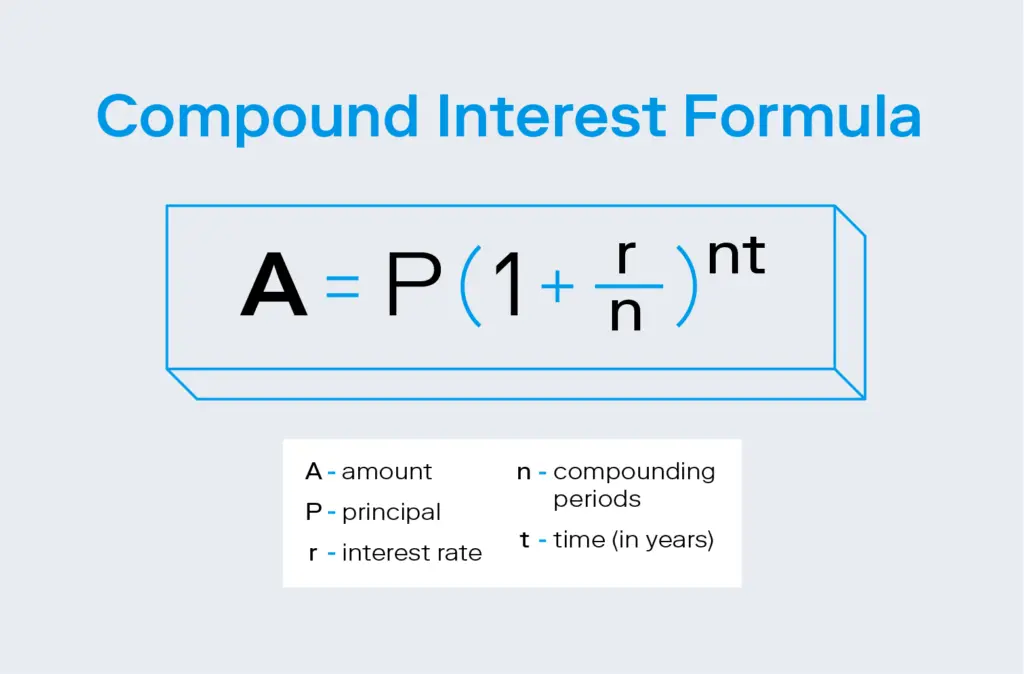
Factors Affecting Compound Interest
Compound interest is influenced by several critical factors that can significantly impact the total amount earned over time. Understanding these elements is essential for maximizing potential earnings from investments.
The first and foremost factor is the interest rate. A higher interest rate leads to increased compound interest, allowing investments to grow more rapidly. For example, consider an initial investment of $1,000 with a nominal annual interest rate of 5%. After one year, an investor would earn $50 in interest. However, if the interest rate were 7%, the earned interest would increase to $70, amplifying the overall returns.
Another significant factor is the frequency of compounding. This refers to how often the interest is calculated and added to the principal balance. Common compounding schedules include daily, monthly, quarterly, and annually. For example, if the interest rate remains at 5%, an investment compounded daily will yield more than the same amount compounded monthly or annually due to the increased number of times the interest is applied. This phenomenon illustrates the advantage of more frequent compounding.
The duration of the investment also plays a crucial role in determining the effectiveness of compound interest. The longer the money is invested, the more time it has to grow through compounding. This principle is often encapsulated in the “time value of money” concept, which suggests that money available now will earn more over time. For instance, an investment of $1,000 at 5% compounded annually over 30 years could result in over $4,300 compared to only $1,500 if maintained for 10 years.
In essence, recognizing the interplay between interest rates, compounding frequency, and investment duration can help individuals make informed decisions, ultimately enhancing their financial growth through the powerful effects of compound interest.
Practical Applications of Compound Interest in Financial Planning
Understanding compound interest is pivotal for effective financial planning, as it facilitates wealth accumulation over time. The principle of compounding can be harnessed across various financial vehicles, including investments, savings accounts, and retirement funds. Investors can leverage compound interest through consistent contributions to investment accounts. Over time, the interest earned on the initial capital continues to generate additional interest, thereby exponentially increasing the investment’s value.
One of the most practical applications of compound interest involves choosing the right savings account. High-yield savings accounts often offer interest rates that significantly outperform traditional savings accounts. By regularly utilizing these accounts, individuals can ensure that their savings grow at an accelerated rate due to the compounding effect. Those looking for a long-term strategy also benefit from using certificates of deposit (CDs), which typically provide higher interest rates for locking in funds over specific periods.
Moreover, when planning for retirement, 401(k) plans and individual retirement accounts (IRAs) are excellent options that capitalize on compound interest. As contributions to these accounts grow tax-deferred or tax-free, the effect of compounding can dramatically enhance the retirement nest egg. To maximize the benefits of compounding, it is advisable to start investing as early as possible and to make consistent contributions.
Real-life examples underscore the advantages of compound interest. Consider an investor who commits $1,000 annually into a retirement fund yielding 7% interest. After 30 years, that individual could accumulate nearly $100,000. This illustration demonstrates that even modest investments can flourish into substantial sums through the magic of compounding. Prioritizing compound interest in financial decision-making can significantly improve one’s financial trajectory.
