
How to Choose the Best AI Trading Bot for Cryptocurrency in 2026
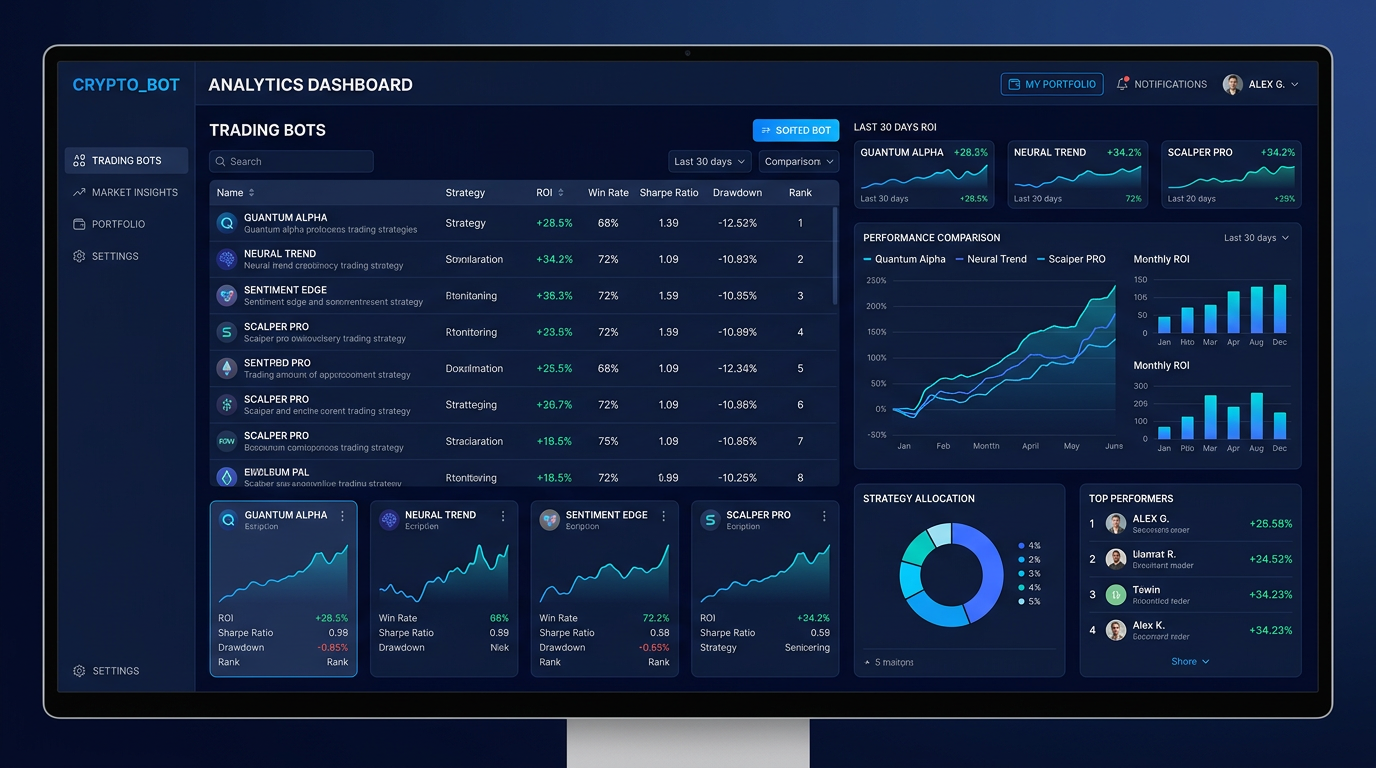
The cryptocurrency market has exploded with AI trading bots, each promising exceptional returns and revolutionary technology. But with hundreds of options available, choosing the right bot for your trading style, risk tolerance, and investment goals can feel overwhelming.
This comprehensive guide will walk you through the critical factors to consider when selecting an AI trading bot, helping you make an informed decision that aligns with your financial objectives.
1. Understand Your Trading Goals First
Before evaluating any AI trading bot, you need to clarify your own objectives. Are you looking for aggressive growth with higher risk, or steady returns with lower volatility? Do you want to trade full-time or supplement your existing income? How much capital are you willing to allocate?
Different bots serve different purposes. Some focus on high-frequency scalping, executing dozens of trades per day to capture small price movements. Others take longer-term positions, holding for days or weeks based on broader market trends. Some specialize in specific cryptocurrencies, while others trade the top 20 coins with diversification.
Understanding your goals helps you match the right bot to your needs. If you’re a busy professional who can’t monitor trades actively, you want a bot that operates autonomously with minimal intervention. If you’re an experienced trader who wants more control, you might prefer a bot with customizable parameters.
2. Verify the Track Record
Claims of high returns are meaningless without evidence. Any reputable AI trading bot should provide transparent, verifiable performance data. Look for:
- Historical performance with specific dates and returns
- Live trading data that you can verify independently
- Third-party audits from recognized security or accounting firms
- User testimonials from real traders (not paid endorsements)
- Public wallet addresses where you can see actual trades
Be skeptical of bots that only show cherry-picked winning trades or make vague claims like “our AI is 95% accurate.” Legitimate platforms provide detailed performance metrics, including losing months and drawdowns.
Aurum, for example, provides transparent performance data for its Neyro bot (approximately 31% monthly returns) and EX bot (approximately 18% monthly returns). These numbers are verifiable, and the platform has been operating since early 2026 with consistent results.
3. Evaluate the Technology
The quality of the AI technology makes the difference between a profitable bot and one that loses money. When evaluating the technology, consider:
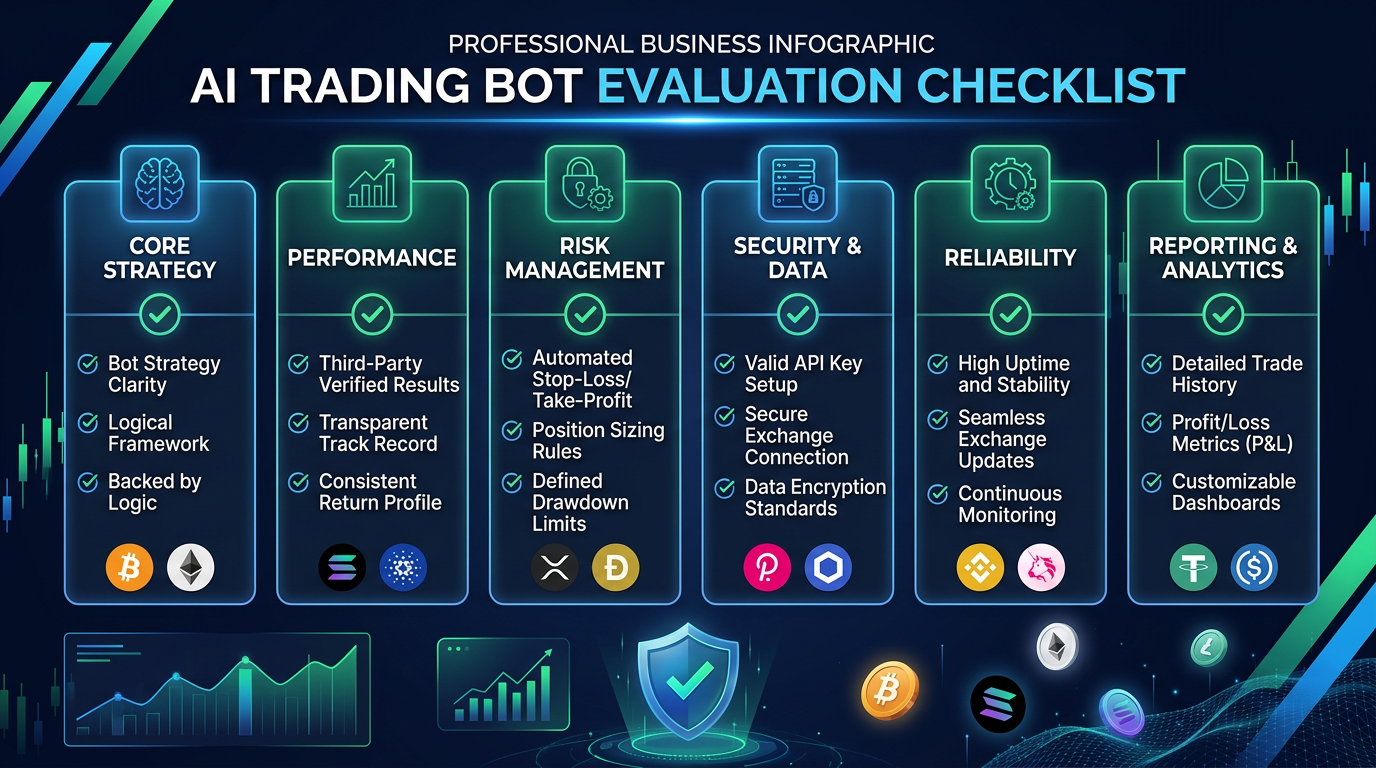
Algorithm Sophistication: Does the bot use simple rule-based algorithms or advanced machine learning? Modern AI bots should use neural networks, deep learning, or reinforcement learning to adapt to changing market conditions.
Data Sources: What data does the AI analyze? The best bots consider multiple data sources: price history, trading volume, social sentiment, on-chain analytics, macroeconomic indicators, and even news events. A bot that only looks at price charts is limited.
Execution Speed: In volatile crypto markets, execution speed matters. Look for bots that can execute trades in milliseconds, capturing opportunities before they disappear.
Risk Management: How does the bot handle risk? Look for features like stop-losses, position sizing, portfolio diversification, and maximum drawdown limits. A good bot protects your capital as aggressively as it seeks returns.
Backtesting: Can you test the bot’s strategy against historical data before risking real money? Reputable platforms offer backtesting tools so you can see how the AI would have performed in past market conditions.
4. Security and Custody
This is non-negotiable. Your cryptocurrency must remain secure at all times. The best AI trading platforms use non-custodial architecture, meaning your funds stay in your own wallet. The bot connects via secure API to execute trades, but it never has direct access to withdraw your funds.
Avoid platforms that require you to deposit cryptocurrency into their wallets. Even if the platform is legitimate, custodial architecture creates unnecessary risk. If the platform gets hacked, goes bankrupt, or simply disappears, your funds could be lost.
Non-custodial platforms like Aurum use institutional-grade security: encrypted connections, multi-factor authentication, regular security audits, and API permissions that limit what the bot can do (execute trades only, not withdraw funds).
Learn more about Aurum’s non-custodial security →
5. Transparency and Communication
A trustworthy AI trading platform should be transparent about how their technology works, what risks are involved, and how they make money. Red flags include:
- Vague explanations of the AI technology
- Guaranteed returns (no trading system guarantees profits)
- Pressure tactics to invest quickly
- Lack of company information (no team, no address, no registration)
- Poor customer support (slow responses, generic answers)
Look for platforms with clear documentation, responsive support teams, and detailed FAQ sections. Aurum, for instance, provides comprehensive documentation, multiple support channels (Telegram, email, BackOffice), and detailed explanations of how their AI algorithms work.
6. Supported Cryptocurrencies
The best AI trading bots focus on the top cryptocurrencies with high liquidity and established trading history. Bitcoin, Ethereum, and other top-20 coins offer:
- High liquidity (easy to enter and exit positions)
- Lower manipulation risk (large market caps are harder to manipulate)
- Established price history (better data for AI training)
- Reliable exchanges (multiple trading venues)
Be cautious of bots that trade obscure altcoins or tokens with low liquidity. These markets are easily manipulated, and even good AI can lose money trading assets with poor price discovery.
7. Fee Structure
Understand how the platform makes money. Common fee structures include:
- Performance fees (percentage of profits, typically 10-30%)
- Management fees (percentage of assets under management, typically 1-3% annually)
- Subscription fees (flat monthly or annual fee)
- Trading fees (percentage of each trade)
- Withdrawal fees (fixed fee or percentage when moving funds)
Performance fees align the platform’s incentives with yours, they only make money when you make money. But high performance fees can eat into your returns. Aurum uses a differential compensation structure that rewards long-term network building while keeping fees reasonable.
Avoid platforms with hidden fees, high withdrawal penalties, or complex fee structures that are hard to understand.
8. User Experience and Support
Even the best AI technology is useless if the platform is difficult to use or support is unresponsive. Test the platform’s user experience:
- Is the interface intuitive? Can you easily monitor your bot’s performance?
- Are there mobile apps? Can you check your trades on the go?
- How responsive is support? Do they answer questions within hours or days?
- Is documentation clear? Can you find answers to common questions?
- Is there a community? Can you learn from other users?
9. Regulatory Compliance
While the cryptocurrency industry is still evolving, legitimate platforms comply with applicable regulations. Look for:
- KYC/AML procedures (Know Your Customer, Anti-Money Laundering)
- Registered business entity (legitimate companies are registered)
- Transparent terms of service (clear rules and policies)
- Compliance with local laws (especially if you’re in a regulated jurisdiction)
Compliance doesn’t guarantee safety, but it shows the platform is operating legitimately and takes legal requirements seriously.
10. Start Small and Scale
Once you’ve chosen a platform, start with a small allocation. Even the best AI bots have losing months, and you need to experience the platform firsthand before committing significant capital. Most successful traders follow this progression:
- Week 1-2: Set up account, configure bot, deposit small amount
- Week 3-4: Monitor performance, learn the platform
- Month 2-3: Gradually increase allocation if performance is satisfactory
- Month 4+: Scale to full intended allocation
This approach lets you verify the platform works as advertised before risking substantial capital.
Red Flags to Avoid
Guaranteed Returns: No legitimate trading system guarantees profits. If a platform promises specific returns with no risk, it’s a scam.
Unrealistic Performance: Be skeptical of bots claiming 50%+ monthly returns consistently. Even the best traders and AI systems have losing months.
Pressure to Invest Quickly: Legitimate platforms don’t pressure you to invest before you’re ready. They want informed, long-term users.
Lack of Transparency: If you can’t find information about the team, technology, or how the AI works, walk away.
Poor Security Practices: If the platform doesn’t use encryption, two-factor authentication, or non-custodial architecture, your funds are at risk.
Making Your Final Decision
After evaluating bots based on these criteria, you’ll likely narrow your options to 2-3 platforms. To make your final choice:
- Test customer support (ask detailed questions, see how they respond)
- Read user reviews (look for patterns in feedback)
- Compare fee structures (calculate total cost over 6-12 months)
- Start with the platform that best matches your goals (not necessarily the one with highest reported returns)
Why Aurum Stands Out
After evaluating dozens of AI trading platforms, Aurum consistently ranks at the top for several reasons:
- Non-custodial architecture (your funds stay in your wallet)
- Proven track record (Neyro ~31% monthly, EX ~18% monthly)
- Institutional expertise (team includes former Morgan Stanley and Galaxy Digital executives)
- Multi-algorithm approach (Neyro, EX, and Quantum Omni for diversification)
- Transparent operations (clear documentation, responsive support)
- Reasonable fees (differential compensation structure)
Explore Aurum’s AI Trading Platform →
Final Thoughts
Choosing the best AI trading bot requires careful evaluation of technology, security, transparency, and fees. Don’t rush the decision. Take time to research, test, and verify before committing capital.
The right bot for you depends on your individual goals, risk tolerance, and investment timeline. By following the criteria outlined in this guide, you’ll be equipped to make an informed decision that supports your financial objectives.
Remember, even the best AI trading bot is just a tool. Success still requires starting with realistic expectations, managing risk appropriately, and monitoring performance regularly. The bot does the heavy lifting, but you’re still the captain of your financial ship.
Start with Aurum’s proven AI trading bots →
Ready to explore AI trading? Learn more about Aurum and their AI trading bots.
This post is for informational purposes only and is not financial advice. Cryptocurrency trading involves substantial risk of loss.
