Quote left marks

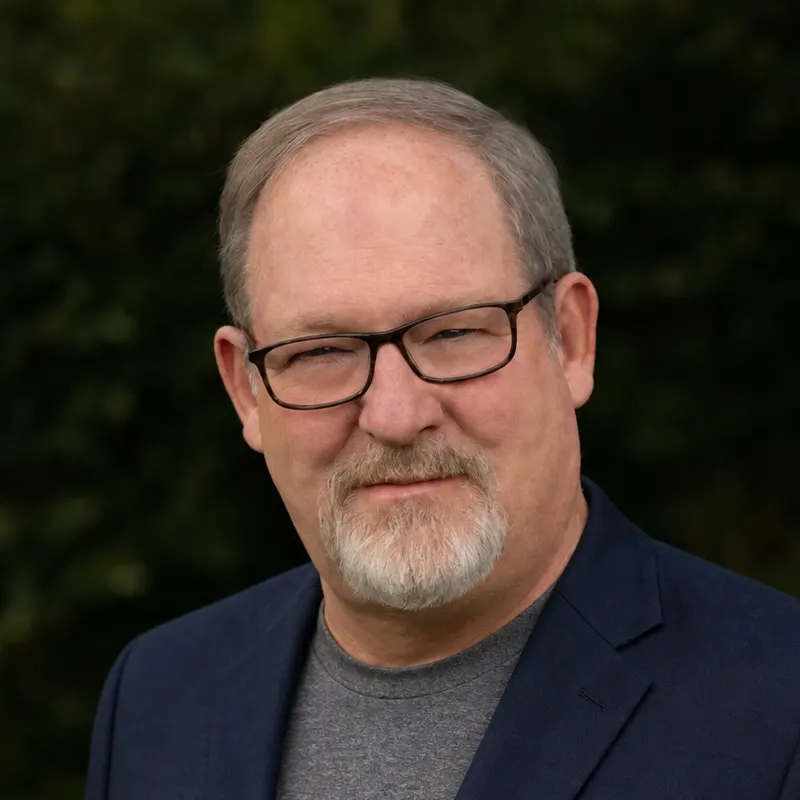
rick billings MASTER-CRAFTSMAN PHOTOGRAPHER & ENTREPRENEUR

I'm Rick Billings, a diversified entrepreneur, professional photographer, networker, website developer, crypto enthusiast, and serial entrepreneur. Besides God and Family, I am passionate about helping others achieve their full potential. 

When Rick Billings remembers how it all began, he can still see the small backyard in Bellevue, Nebraska, and the exact moment his father handed him one of his professional cameras. It was 1970, and Rick was eleven — a kid with a curiosity that outgrew his pockets. His father, a United States Air Force photographer who ran the photo-reconnaissance division at SAC Headquarters, Offutt AFB, didn’t realize he was shaping a lifetime when he taught his son to look for light, to find patience in a shutter click, and to insist on doing things better than anyone else. “Photographers are a dime a dozen, son. You have to become the best,” his father would say, and Rick took that like a promise.

In those early years, Rick was exposed to film developer, Kodak B&W paper, and many conversations with his father about photography. Rick’s first photography venture as a business was utterly sincere: he photographed horses near his house, raced home to develop black-and-white 8x10s, and went back and sold them the same day. The joy wasn’t in the money so much as watching people’s faces when they saw an image they really loved. He learned the craft, the business, and — almost without knowing it — how to make a life around both.

High school ended in 1978, and the next door opened to mentorship. 

Les and Lorraine Hassel, award-winning portrait photographers in Bellevue, took Rick under their wing. He worked for them seven years and clung to every off-the-clock hour he could get, talking portraiture, studio lighting, and hard-earned business sense. Les became more than a boss; he was like a second father, a steady light for a young photographer trying to find his own voice.

At 26, Rick faced the kind of choice most people only ever daydream about. A respected West Omaha photographer offered to sell his studio — a beautiful 4,000-square-foot home studio that had earned a place among the city’s best. Newly married to April, and with more courage than capital, Rick and April decided to leap. It took dogged persistence and eight bankers’ worth of conversations, but they secured four loans totaling $267,000 and stepped into ownership in October 1985. The studio had once been called David Lee Studio; under Rick’s guidance, it would grow into Rick Billings Photography & Video — a place where his craft and heart met.

This was a hard choice along the way. 

Leaving Les and Lorraine Hassel after seven years of employment, friendship, and mentorship felt like leaving family, but Rick understood that starting his own studio was the next chapter he had to write. The gamble paid off in ways both expected and surprising. In 1984, he had already had a brush with history — photographing President Ronald Reagan at a fundraising event in Omaha — and later that connection would grow into opportunities he could hardly have imagined.

In 1989, fate knocked at his door in the form of two men from the State of Nebraska who offered to buy the property for a new road. The state needed land near Father Flanagan’s Boys Town. The negotiation that followed turned into a rare piece of good fortune: Rick acquired an acre of land slightly behind the old studio, rezoned it commercial, and saw its value quadruple. He used that leverage to borrow half a million dollars and, together with April, designed an 8,000-square-foot, state-of-the-art portrait studio at 132nd & West Dodge Road. Every inch of that studio — two camera rooms, the main one being 40' by 40' octagonal — reflected their vision. They moved in March 1992, and the studio became a home for his craft, clients, at his peak, over 27 employees, and the community.

Curiosity always tugged Rick forward. 

In 1995, after a year spent immersed in emerging digital technology research, he took one of his boldest steps: transitioning a professional portrait studio from film to digital capture. The first camera that matched film quality had been developed by Kodak for NASA and carried a price tag that made most people wince — nearly $30,000 for just the body. Rick bought it anyway. He didn’t see expense; he saw horizon. That decision made him one of the first digital portrait photographers in the world and opened doors to a new kind of work and teaching.

Kodak noticed. 

They invited Rick to share what he had learned. Over the next dozen years, he took his experience on the road, lecturing in over 35 states and across Canada and Mexico — teaching studios how to transition to digital, how to care for clients in a changing world, and how to make technology serve the art. Kodak called him “one of the photographic industry’s foremost authorities on digital imaging,” and in 2003, Canon chose him as one of eleven U.S. photographers featured on a “Digital Workflow” CD distributed to half a million professionals. Those acknowledgements were warm validation, but the work itself — the thrill of helping others change their businesses — was the reward that kept him traveling, teaching, and lecturing at professional photography conventions.

One of Rick’s most memorable assignments came in the fall of 2000. He was asked by Kodak to photograph the 189 heads of state who attended the United Nations Millennium Summit, leaders from around the world, including President Bill Clinton, Prime Minister Tony Blair, and President Vladimir Putin. This was the first official digital image of this type, transmitted within minutes and watched as a group photo ran in full color on the front page of the New York Times the next morning. It was a moment that summed up everything he’d worked for: craft, precision, and the ability to move an image across the globe in an instant.

2000 UN Photo 189 Heads of State


Rick’s appetite for innovation also reached online.

In 1997, he founded the getDigital Training Center in Omaha, the country’s first digital photography training center, where photographers from around the world came to learn how to move their studios into the digital age. 

In 1999, seeing the potential of youth sports and the web, he co-launched ASPN.com (American Sports Photo Network), one of the first online sports photography companies, putting more than nine million images online — a venture years ahead of its time and backed by significant investment. The dot-com crash of 2000 rerouted that plan, but it didn’t dim his entrepreneurial spirit. He and April moved the family to Orlando in 2001 and, through twists and turns, Rick kept evolving.

Behind the awards and the big projects, Rick’s life was threaded with quieter commitments. He photographed over 50,000 portrait sessions, and his studio photographed more than 1,200 weddings and events. He earned a Master’s degree in 1987 and the Photographic Craftsman degree in 1995. Dozens of awards marked his career, but what lingered in his mind were the faces he’d met, the families he’d watched grow, and the trust clients placed in him.

Change, again, arrived in the form of reinvention. After decades of trading hours for income and working long studio days, Rick sought a different model for his life — one that could offer financial freedom and more time with his family. He turned to network marketing, applying the same discipline and online savvy that had driven his photography career. He built a business with USANA, later joining ARIIX at its launch in 2011, and continued to share tools and mentorship with people seeking multiple streams of income. In 2017, he won the Premier #1 Salesperson Award for North America and celebrated with a nine-day Caribbean cruise with his boys — a moment he describes as the payoff for long hours and faith in a new path.

Rick and April’s partnership remained at the center of the story. 

Married in 1984, they celebrated anniversaries amid trips and company rewards — including a wedding-anniversary celebration in Cancun in 2016. Their dreams expanded beyond studio walls into the open road. In December 2018, they sold almost everything, kept what truly mattered, and hit the road in a 2019 Newmar 44-foot motor coach with a Jeep in tow. For a few years, they embraced RV life, traveling while Rick continued building his online business and keeping an eye out for fresh opportunities.

Today, Rick lives in Winter Garden, Florida, with his wife, April, and their three boys, all of whom live close by. The Omaha studio he founded in 1985 still operates, a living bridge between past and present. He has lectured for Kodak and Canon, photographed presidents and strangers alike, taught thousands how to embrace a digital future, and built businesses that, like his photographs, capture honest moments of transition.

His story is not just about cameras or technology. 

It’s about listening to a father’s offhand advice and turning it into a life’s worth of striving. It’s about taking loans, building studios, making bold technology bets, and sometimes falling forward. It’s about teaching, and then learning some more. Above all, it’s a story of light — how one careful observer learned to find it, shape it, and share it with the world. If you want to see the world through his lens now, you can view Rick’s images throughout his website here.

Since 1985, as a self-employed entrepreneur, I have developed and honed a diverse set of skills. Below is an overview of the software and platforms I have mastered, along with my proficiency levels, rated on a scale of 1 to 10.

All Aspects of Professional Photography

10

Microsoft 365 (Word, Excel, PowerPoint)

10

Adobe Photoshop, Plugins & Scripts

10

Screen Flow Video Editing (Mac)

10

Adobe Lightroom

8

WordPress, Themes, & Plugins

10

Adobe InDesign

10

Social Media, Graphics, Post Management, Etc.

10

Business Management

10

Use of AI for Blogging

9

General Marketing & Advertising

9

Use of AI for Social Media & Imaging

7